
How the Robert Mugabe-led government of Zimbabwe sought to address land distribution inequalities and how it carried out the land redistribution in 2000, overturning the controversial colonial-era land rights injustices, is not controversial; instead, what is morally repugnant is the egregiously racist display of the Western media that sells biased narratives softening the controversy of how White settlers dispossessed ‘natives’ of their land rights by weaponization of the British legal doctrine to clear the way for white settlement unfettered by prior occupation or title.
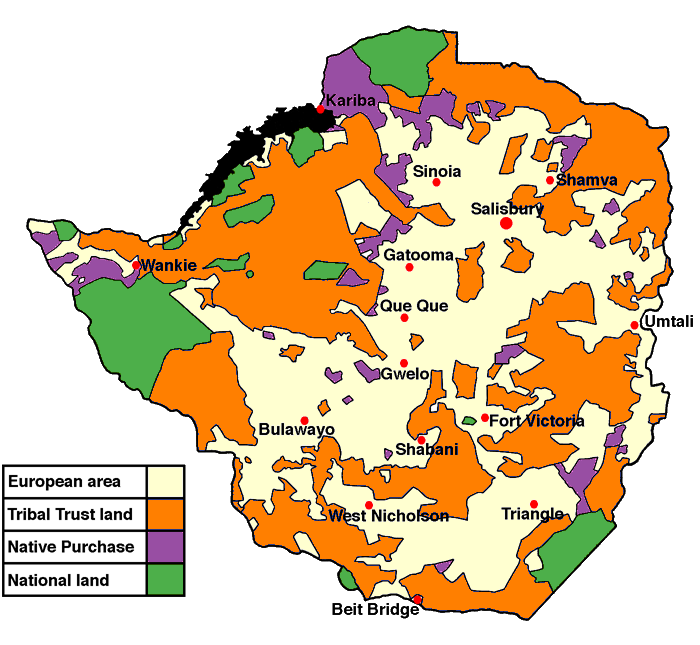
Willing Buyer, Willing Seller (WBWS) Model
The WBWS model was a market-driven land reform mechanism established under the 1979 Lancaster House Agreement, designed to transition Zimbabwe from colonial-era land inequalities to a more equitable distribution. Under this policy, the Zimbabwean government purchased white-owned agricultural land at mutually agreed prices, with financial assistance initially provided by the United Kingdom.
The model was largely unsuccessful with government only managing to acquire 3 million hectares of the planned 8 million hectares. The failure was down to multiple factors including high cost, White ‘owners’ making available largely poor lands for farming, the withdrawal of UK funding in the late 1990s due to concerns over how the land was being redistributed with allegations it was often allocated to political elites rather than the rural poor.
Fast Track Land Reform Programme (FTLRP)
Following the apparent stuttering of the WBWS, growing public dissatisfaction over the programme and the rapidly falling political fortunes of ZANU PF and Mugabe amid the strengthening opposition – Movement for Democratic Change (MDC), Mugabe and his allies hastily implemented the highly politicised Fast Track Land Reform Programme (FTLRP). Launched in 2000, the FTLRP was a robust, government-led initiative that resulted in the acquisition of over 5 million hectares of white-owned commercial farmland for redistribution to Black citizens.
Goals and Mechanisms
The program sought to quickly transfer land that had been historically concentrated in the hands of a small white minority to marginalized African farmers. The land was redistributed under two primary models:
- A1 Model: Allocated small, five-hectare plots to landless and poor rural families for subsistence farming and communal grazing.
- A2 Model: Allocated larger commercial farms to new Black farmers with the resources and skills to farm profitably.
The main feature of the FTLRP was its politicisation and the grassroots occupation of farms, often led by war veterans and aspiring beneficiaries. This rushed programme lacked formal administrative structures – secure land tenure policies, and adequate government funding hence its social and economic gains remain limited.
Land reform was necessary in Zimbabwe to ensure equitable distribution and correct colonial-era skewed distribution.
The Privy Council Land Case (In Re Southern Rhodesia) (July 1918)
In July 1918, the Judicial Committee of the Privy Council in London heard a massive legal dispute over who owned the “unalienated land” (land not yet sold to settlers) in Southern Rhodesia (now Zimbabwe). The case involved the British Crown, the British South Africa Company (BSAC), and the local Black people.
The dispute arose in the run-up to self-government for the white settler population. After invading and seizing the territory in the 1890s, the British South Africa Company (BSAC) had overseen Southern Rhodesia’s administration for nearly three decades. In its appeal, the company lay a claim for all the “unalienated lands”. Its arguments rested in large part on mining and land concessions it had obtained from Lobengula, King of the Ndebele.
In his response to appellants’ appeals for the court to consider the land rights of the “native” population, Lord Sumner argued:
Some tribes are so low in the scale of social organization that their usages and conceptions of rights and duties are not to be reconciled with the institutions or the legal ideas of civilized society. Such a gulf cannot be bridged. It would be idle to impute to such people some shadow of the rights known to our law and then to transmute it into the substance of transferable rights of property as we know them.
The 1918 Ruling and Its Impact
On July 29, 1918, the Privy Council delivered a controversial judgment. The Committee ruled that:
- The BSAC did not own the land: The court rejected the BSAC’s claim that it held proprietary or private ownership of the land. But the company was awarded handsome compensation for its role in the country’s administration: some £3,750,000, plus a £2million waiver for its war debts, and the right to retain extensive mineral rights, commercial assets and land it had allocated to itself. Self-government for the white settlers was granted in 1923.
- The land belonged to the Crown: The court decided that the unalienated land became the property of the British Crown following the British conquest.
- Indigenous rights were extinguished: The ruling stated that indigenous communal ownership claims had been extinguished by conquest of the Ndebele by the BSAC in the 1893 war. As Lord Sumner succinctly declared, any such rights could not be binding on “successors to [Lobengula’s] sovereignty who came to it by right of the sword”: “Whoever now owns the unalienated lands, the natives do not.” legally justifying the displacement of local Black people.
Conclusion
Imperfect as the Zimbabwe land redistribution programme has been, its restorative foundation cannot be dismissed. Black people had been wrongly dispossessed of land by White settlers who optimised the European legal doctrines to justify their occupation. The landmark judicial decision handed down by the Judicial Committee of the Privy Council on July 29, 1918, remains one of the most infamous, racist and consequential land rights rulings in the history of the British Empire.
FURTHER READING
“Whoever owns the land, the natives do not”: In Re Southern Rhodesia


Share your valued views below.