Over 10 million South Sudanese or over 66 percent of the population of the country (over 12.48 million) need humanitarian assistance while an estimated 2.5 million people are internally displaced and a further 2.29 million people have fled to neighbouring countries due to armed conflict driven by political rivalry pitched along ethnic identity. After ending the longest running civil war in the continent against the oppressive Sudanese government, this is most certainly not the independence South Sudanese of all stripes dreamt of when they cast their votes in early 2011.
The cost of internal war
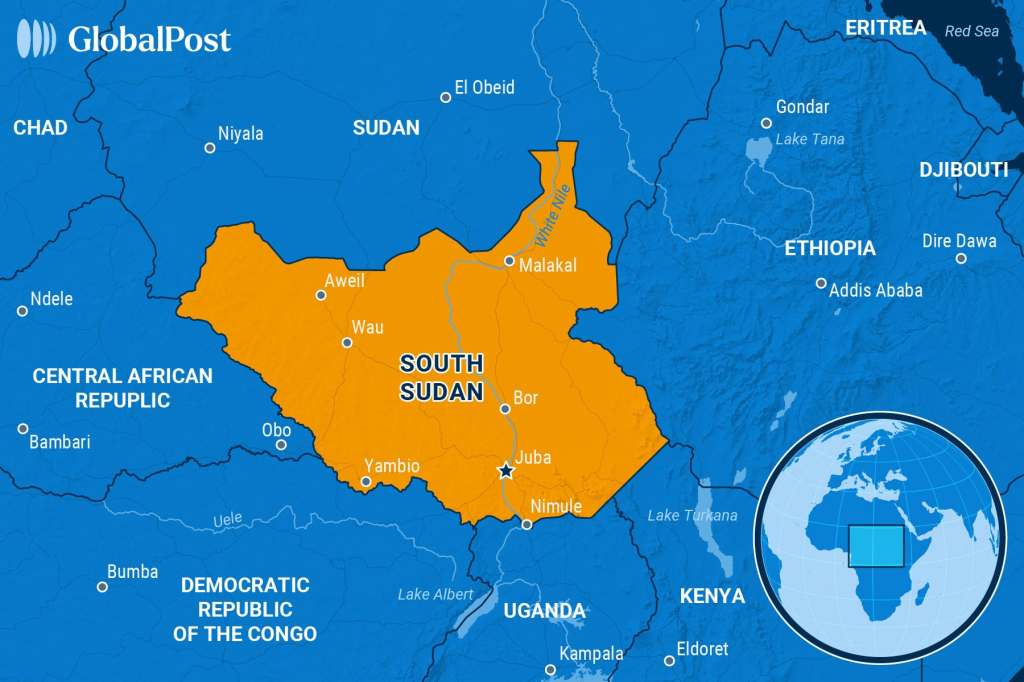
Political instability characterised by persistent conflict and atrocities has beleaguered South Sudan citizens since the country gained independence in 2011. The armed conflict between December 2013 and August 2015 caused an estimated 400,000 deaths. The warring parties, the Sudan People’s Liberation Army (SPLA), under President Salva Kiir, and the Sudan People’s Liberation Movement-in-Opposition (SPLA-IO), led by former First Vice President Riek Machar are accused of war crimes, including extrajudicial killings, torture, child abductions and sexual violence.
Roots and manifestations of conflict
While power and the distribution of oil revenues are central to the conflict, tribal allegiance frames national politics in South Sudan. The political rivalry between President Kiir (an ethnic Dinka) and former Vice President Machar (an ethnic Nuer) defines the South Sudan political discourse.
South Sudan is a socially diverse country; it comprises communities of over 64 distinct ethnic groups that historically relied on tribal affiliations for mutual survival, resource-sharing, and collective defence. Sadly, the social diversity and traditional group loyalties have also been exploited for political power, control of resources and suppression of other communities. As alluded to earlier, South Sudan’s national political rivalries follow what has become a predictable pattern in Africa where ethnic differences are frequently converted into political rivalries. In this environment, political ideological identity is framed along ethnic lines, and traditional group loyalties are exploited to maintain polarised political competition.
Condemnation of tribalism and violence
How violence is viewed in the African continent needs to change so citizens are treated with respect and dignity without regard for tribe and ethnicity. Authorities in Africa are guilty of tolerating violence against civilians in the many active conflict zones across the continent. There is a guilty and scandalous level of tolerance on the part of regional and continental bodies towards tribally driven violence engineered and sustained by both the State and the opposition.
Truth be told, the ‘Us vs Them’ instinct is not an ethical foundation upon which African states, including South Sudan, should be building governance structures today. Weaponisation of tribe and ethnicity has become central to the politics of South Sudan causing near irreconcilable fissures. Tribalism creates and nurtures distrust and resentment between communities; it promotes and sustains corruption and leads to incompetence as merit is frequently replaced by subjective social identities.
Delays in resolving the conflict
Comprehensive attempts have been initiated to achieve peace with multiple agreements being signed by the warring factions between 2015 and 2018 resulting in the 2018 Revitalized Agreement on the Resolution of the Conflict in South Sudan (R-ARCSS) which established the Transitional Government of National Unity (TGoNU) and a power-sharing arrangement between Kiir and Machar. The R-ARCSS also outlines a roadmap for institutional reform and eventual national elections however, there seems to be a lack of appetite to implement the reforms. Notable delays compounded by President Kiir’s unilateral amendments and major political reshuffles have deepened mistrust and political uncertainty. The transitional period has been extended multiple times, barring significant political changes, the country’s first elections are now earmarked for December 2026.
Conclusion
Do not fear difference, make a difference. If the South Sudan political leadership truly wants national unity reality, they must be prepared to sacrifice tribal and nationalist loyalty and embrace national identity. Stopping ethnic conflict must be taken seriously if decades of war for independence against the Khartoum government and associated human losses is to be worth the sacrifices made by the people. Politics must be a service to the public not a route to accumulating power and wealth for the political elite and their allies. This requires a structural reconstruction that will oversee a framework for fair political representation, strong legal systems, and active diplomacy to address the root causes of fear and division.
FURTHER READING:
South Sudan’s crisis, explained: 5 things to know in 2026 | Concern Worldwide
South Sudan – Global Centre for the Responsibility to Protect


Share your valued views.