Xenophobia, irrational fear, and hate, and not black African immigrants make South Africa less safe for everyone. There is pulpable resentment and growing negative sentiment about immigrants from neighbouring African states and the rest of the continent among South African black ordinary citizens who view migrants as the source of all challenges facing the country, be it unemployment, increasing crime rate, shortage of decent, affordable accommodation and other socioeconomic ills.
Is migration a problem in South Africa, and to what extent? Are the extant borders reflective of African nations? If we can address these questions, then our views of migration will change. South Africans risk blaming the flood and excusing the faulty plumbing when they pay little to no attention on the causes of migration. People need to appreciate that migration is as old as human society and nothing will stop it, all we can do is work to make it safe for everyone.
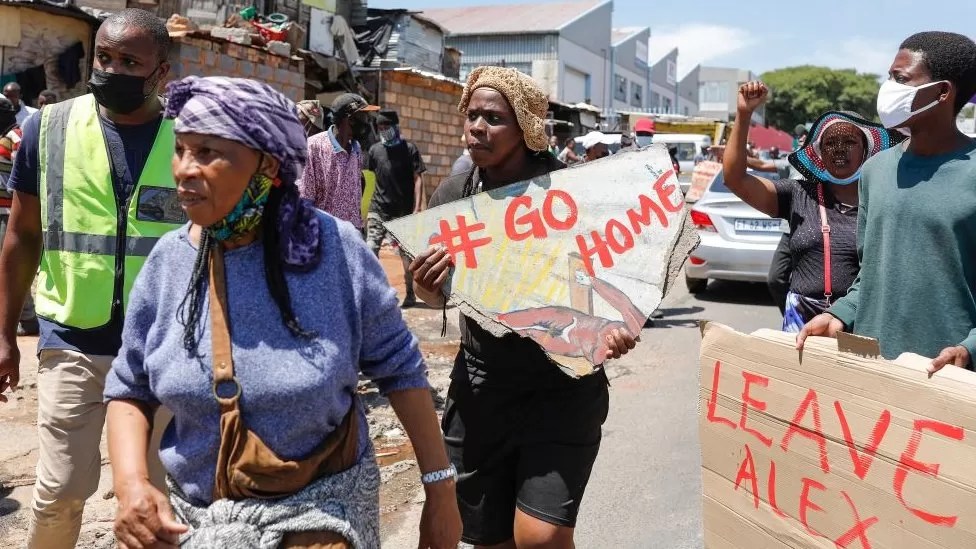
There are many reasons that push people, mainly young African adults, out of what should be their safety zone (their homelands) and into the unknown, unpredictable foreign world. In the African continent, push factors such as abject poverty, political instability, torture, among other abusive conditions are responsible for most migration. And there is no deterrent imaginable that equals the conditions that force their migration.
Do South African citizens have a case in blaming black immigrants of the worsening socioeconomic conditions in their country? Everyone is entitled to their opinion, but none is entitled to their set of facts. There are legitimate concerns of the stuttering economy and related social problems from an astronomic increase in the use of recreational drugs and related petty crime to serious armed gang and violent crime activity mainly in major cities.
To blame all crime on immigrants is reductionist and unhelpful. While there are indications of an increase in illegal activity in certain urban communities, there is no objective evidence that directly and exclusively links these criminal activities to black migrants. Indeed, every community has its bad apples, but many black immigrants are resourceful and hardworking individuals toiling to make an honest living. South African jails were not empty until the arrival of immigrants, crime knows no nationality.
Difficulties faced by ordinary South Africans are real, and migration may be contributing to some specific issues but certainly not all. There is a need to objectively identify the different factors and find solutions. For instance, poor service delivery, poor economic activity, and the rise in large-scale corruption within public entities such as the Eskom scandal is a governmental rather than a migrant issue.
Notably, black South Africans are targeting black migrants from other African countries for hate, blame, and abuse for their circumstances, but they seem not bothered by Asian and white European immigrants. Even more disturbing is the fact that black migrants have become a source of deflection and diversion for opportunists in government who would do anything to shirk their responsibilities to the electorate.
Are we victims of arbitrary borders drawn along Western colonialists’ economic interests over native Africans’ interests? And is it right that such borders drawn without our consent would determine our nationality, determine who, where and how Africans move within the African continent?
Borders have now become a tool that not only separates but divides natives of the African continent and legitimise abuse of Africans by Africans. We have characters like Nhlanhla Lux in society forever, characters who trade on xenophobia. There is an upsurge of vigilantism and groups such as Nhlanhla’s Dudula, whose sole purpose in South African society is to target for hate and abuse vulnerable black Africans seeking refuge from some of the world’s worst regimes.
Contrast the above with yet another dimension where on one end are groups calling for tighter border controls and restrictive immigration laws and on the other end are groups calling for a freer, borderless Africa. People like Julius Malema, the leader of EFF – an opposition party in South Africa – and Patrick Lumumba a Kenyan legal scholar and activist have been unrelenting in their calls for a borderless Africa where no African would be a foreigner anywhere within the African continent.
The concept of a borderless Africa and its benefits, in theory is enticing but its implementation would be fraught with insurmountable challenges seeing how diverse and incompatible infrastructure in the continent is. The Africa of today is a result of the mechanisation of colonial masters. We can break through the barriers, but greater care is required to navigate the terrain.
Free trade and the removal of travel restrictions would be a positive step but will require extensive work at physical infrastructure compatibility, integrating laws, services and investment in innovation in the continent.
It is immoral that an African from one part of Africa will be stripped of his dignity for daring to find a better life in another part of Africa, and unreasonable that an African will require a visa to travel across the continent. While there is truth in that migration can alter the host’s socioeconomic and political ecosystems, it must never be a crime for an African to move within the territory. Bold and creative solutions must be found to make the continent safe for its citizens.
 MTHWAKAZI LAB
You must be logged in to post a comment.