The problem facing modern-day Matabeleland lies not in what we think but how we think; it is not the ideologies we propose that are a source of great political worry but how we have formulated those ideas.
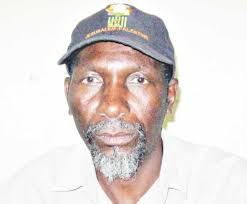
In this article I focus on Ndzimu’s latest call for the formation of a regional party that would be representative of the Matabeleland region; he aptly calls it the South Western Nations Congress (SWNC). Good as the idea is, I view it as a good example of a great idea whose formulation basis and intent need challenging.
While I understand Ndzimu’s position and totally agree with the proposal to create a movement espousing Mthwakazi interest, I think it would be interesting to understand how a man can shift positions from exuding Kalanga supremacy and fighting for a Kalanga state while denouncing and even repudiating certain population groups, specifically the Nguni – often referred to as Ndebele, and selectively incorporating those ethnic groups he perhaps perceives as less threatening to his interests will suddenly embrace everyone in the Mthwakazi territory. What has influenced the latest proposal? Is it a genuine change or political transition and why?
I appreciate that cynicism, like gullibility, will be a wrong basis on which to build Mthwakazi political arguments and freedom. We certainly do not want to enforce blindness in the entire political space of Matabeleland by silencing critical thinking. However, we will similarly never be in control of our political circumstances if we keep our focus on the ‘what’ element of the politics while ignoring the fundamental ‘how’ aspect of the processes. It is by no means out of cynicism that I question Ndzimu’s sudden change of ideology; if anything I believe he, like all Mthwakazians, reserves the right to change his views at any time and thus he deserves a fair critique of his latest hypothesis.
Lack of detail about the construction of the idea remains my major concern not tribalism. It is the for that reason that on Facebook debates I have rejected outright, the allegations of tribalism being levelled against his latest ideological contribution. My primary concern remains the desire to understand how he (Ndzimu) has arrived at this new political position and how he concludes that Moses Mzila-Ndlovu should be the leader of the proposed SWNC.
As critical thinkers, we have to have a good grasp of how our political thinkers formulate their ideas and resist having ideas imposed on us. That however, cannot be achieved through protectionism and unnecessarily defensive approaches that promote compliance while threatening innovation and objectivity within the Matabeleland political space. Ndzimu and others like him reserve the right to be heard and engaged with in a civil manner. The goal of our intellectual debates must be to unfold, understand and separate ghost stories from what are truly good political innovations.
To create a truly free Matabeleland we need to reconfigure the political space, our political intents and our political interactions. We have, to this point, failed to construct a sustainable Matabeleland political agenda that is independent of Zimbabwe’s poisonous influences because we have not been able to create space for constructive political debates.
Focus on the past keeps Matabeleland citizens politically fearful of engaging in an honest and robust present-day political debate yet perpetually worried about the future. It is this fear that keeps Matabeleland individuals out of open objective political debate; it is that fear that disenfranchises Matabeleland citizens from the broader politics; it is the same fear that keeps the region relatively politically compliant and thus slave to Zimbabwean dictates.

